What I run.
A secondary-market brokerage, one person, every weekday, on software I built. Six real screens below. Counterparty names are blurred or replaced; nothing else is staged.
The morning job writes the orders
A Claude agent reads the deal inbox every weekday, checks the thread against the CRM’s history with that counterparty, and writes the order: company, side, size, price, structure. Each one is diffed against the source email before it touches the book.
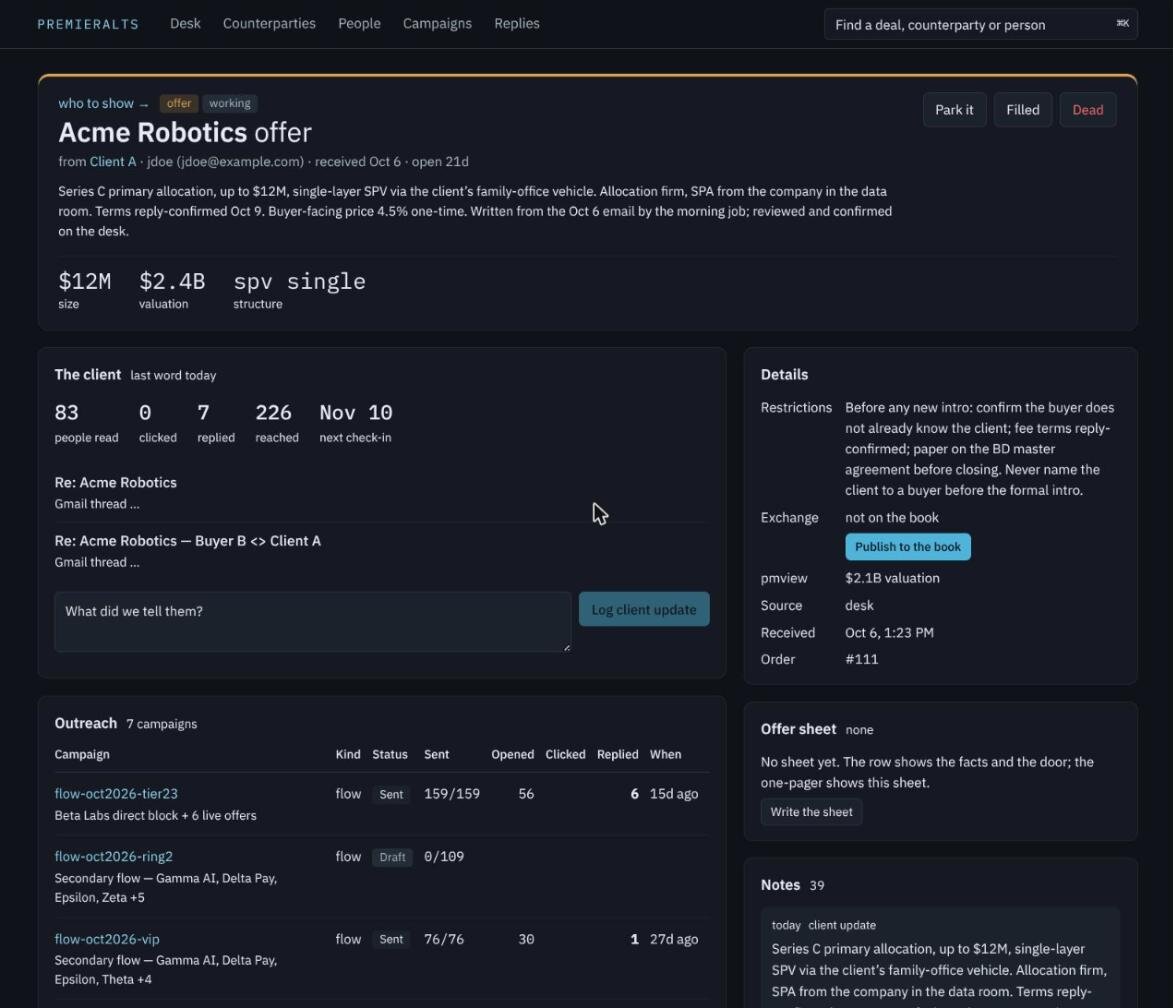 Written by the morning job
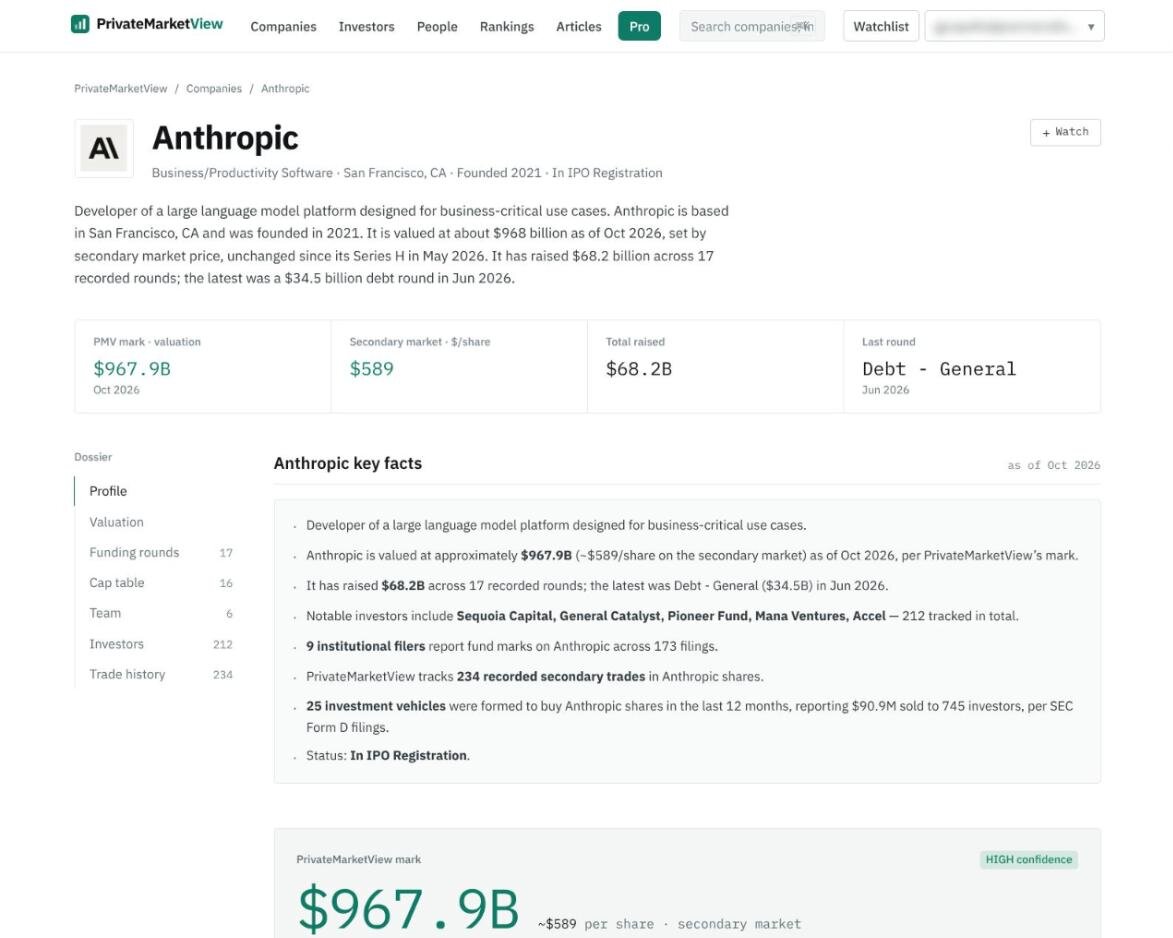
The map: PrivateMarketView
67,000 companies, 55,000 investors, 140,000 people. Nightly pipelines read SEC Form D, Form ADV and N-PORT filings; language-model jobs classify and write the profiles; Stripe sells the record to 2,000 members. Every desk decision starts here.
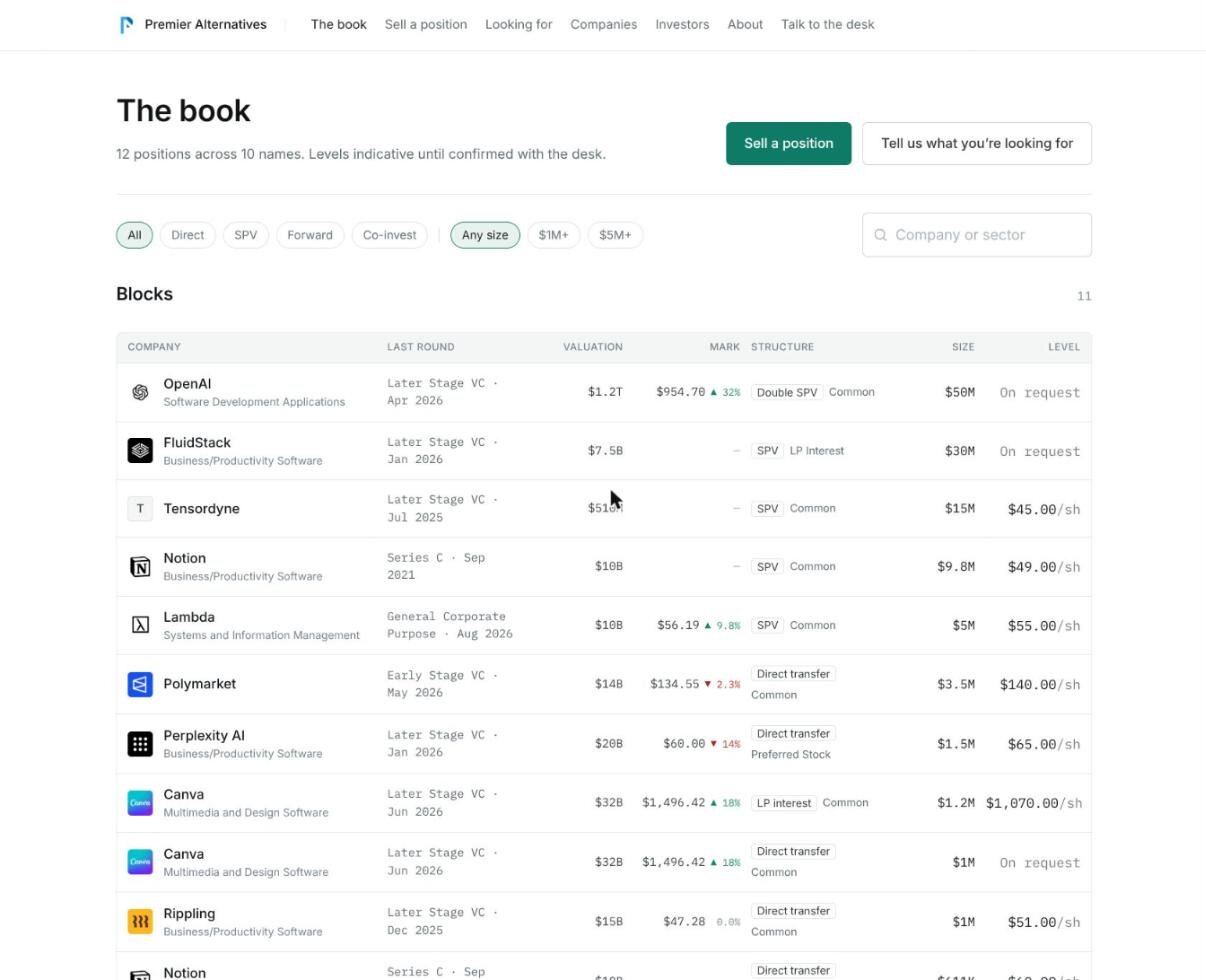
The book: premieralts.com
The brokerage’s storefront. Live blocks with structure, size and level, published from the CRM with one command; two buttons, sell a position or tell the desk what you want; every inquiry lands back on the order it came from.
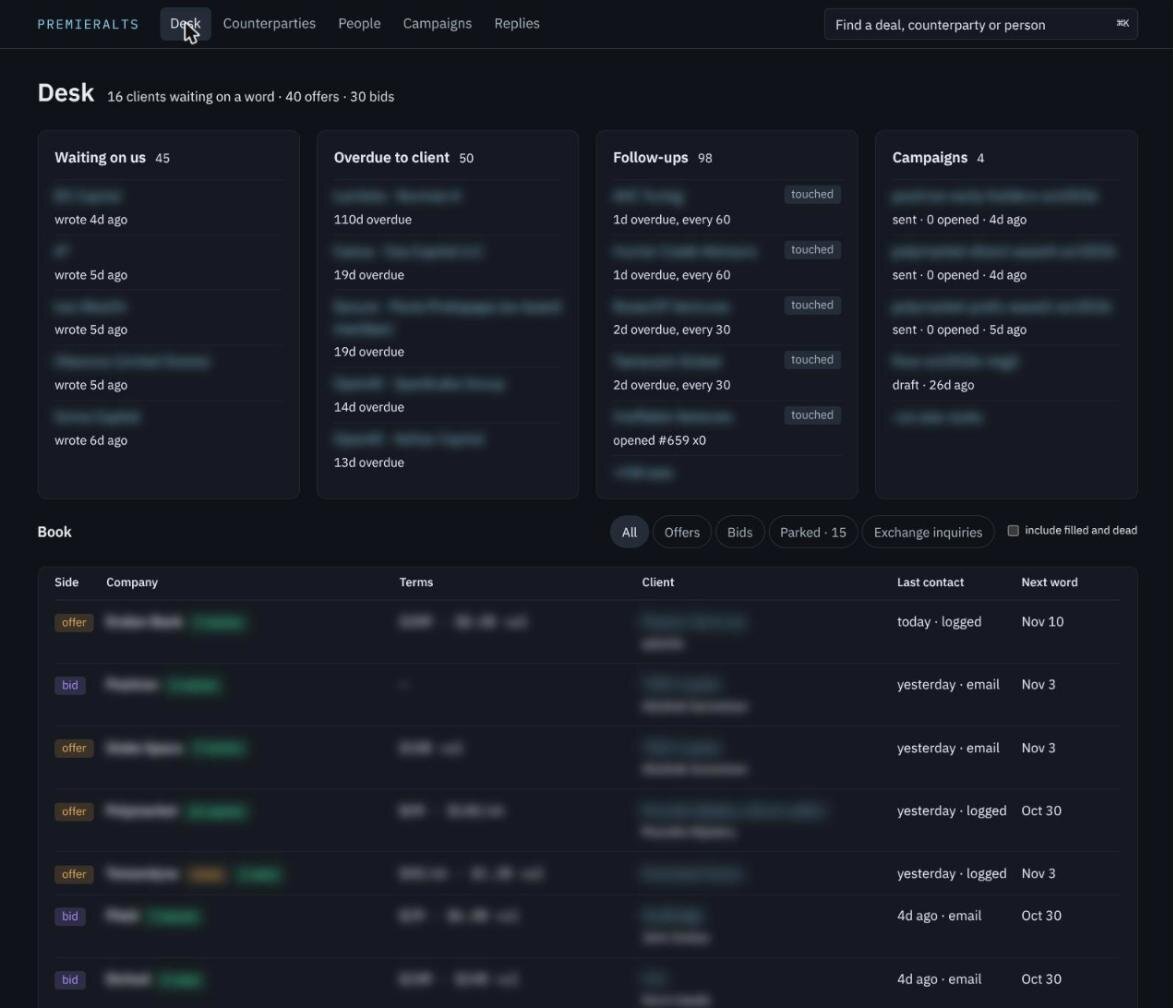
The desk runs itself
Who is waiting on a word, what is overdue to a client, which follow-ups are due, and the whole book with a next date on every row. One screen replaces the spreadsheet, the inbox search and memory.
Outreach at scale, rules in code
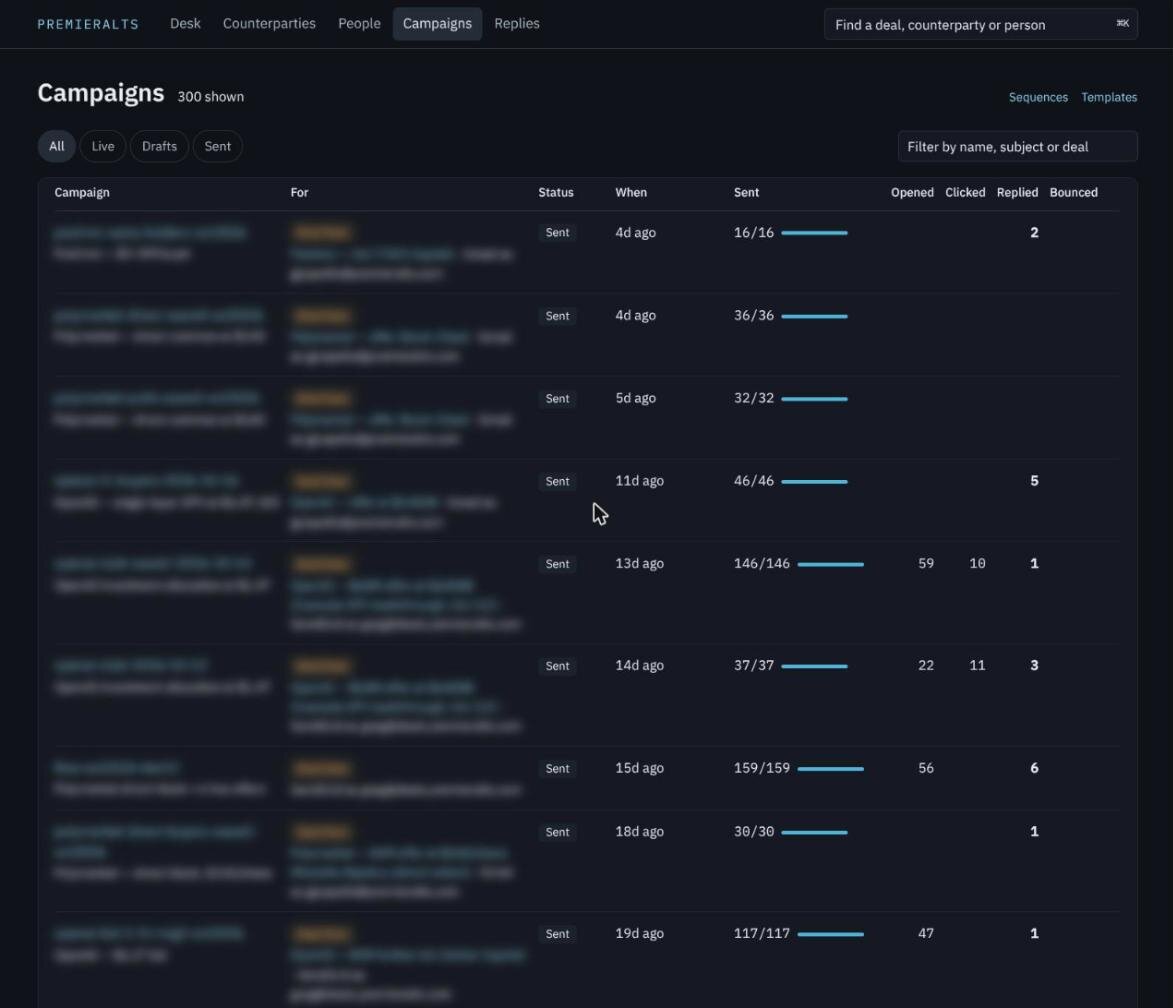
An order routes to the right buyers on its own: co-invest buyers, VIPs first, 21-day cooldowns, per-firm caps, a wall between the two businesses. Small batches go point to point from Gmail, volume goes through SendGrid. Every send, open and reply lands back on the order.
The mailbox the agents run on
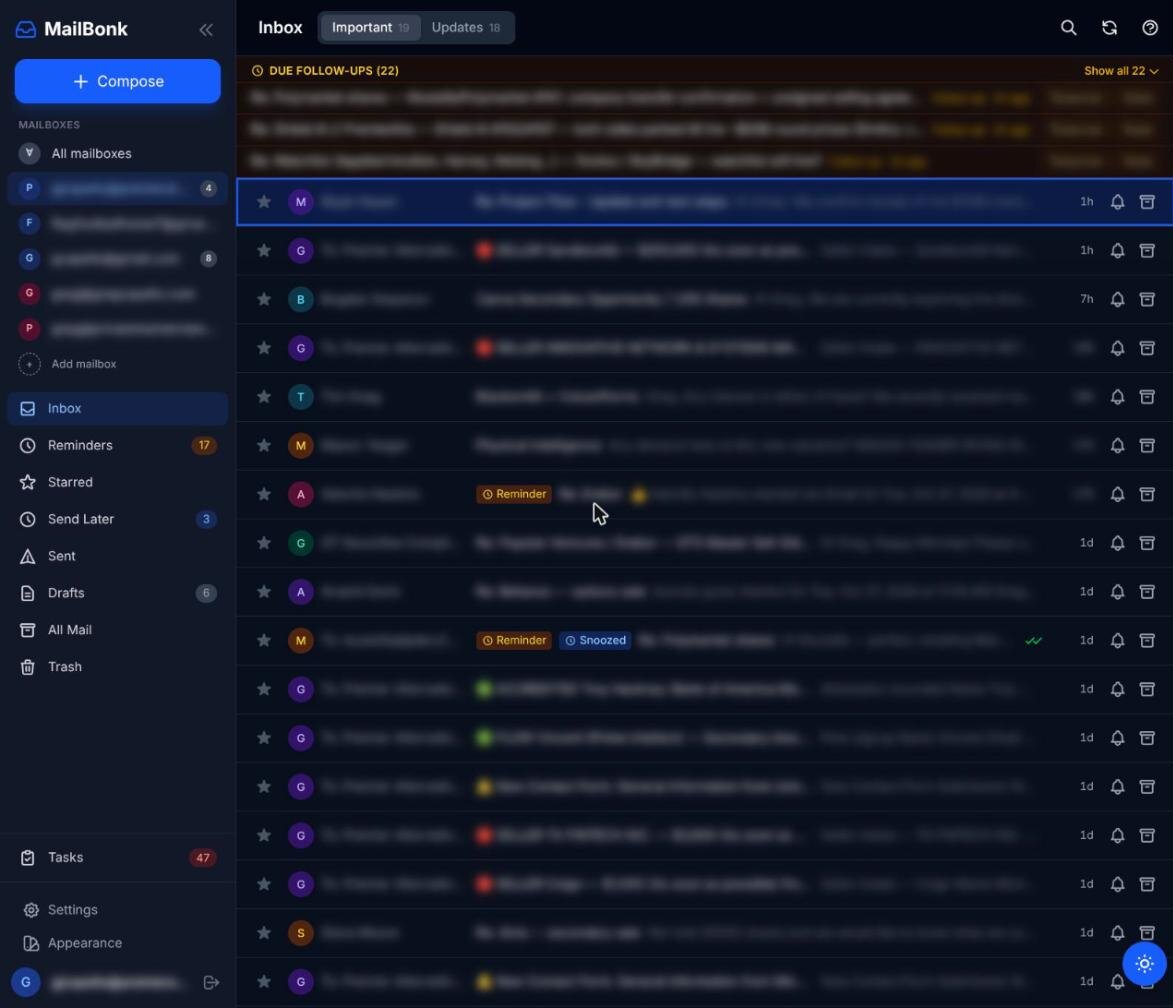
A mail client with an API, across several Gmail accounts: search, threads, drafts, scheduled sends, follow-up reminders. Every agent that touches email goes through it, and a draft stays a draft until a person sends it.
How I build
The model proposes. Pricing, compliance and anything touching a client’s data are deterministic code; the model drafts, classifies and summarizes, and a rule or a person decides.
Every agent output is checked before it counts. Orders are diffed against their source. Drafts stay drafts. Campaign rules run as code on every send, not as instructions in a prompt.
First version live in weeks; it earns the second version. That is also how a pilot build works.
Before this: nine years at Bank of America, where I designed AgileView, US Patent 11,403,315, fifteen thousand daily users, a team of ten.
Want this inside your firm?
Fifteen minutes. I show you the agent live, you name the workflow that eats your team’s week, I tell you if a two-week fixed-price build fixes it.